Is A Day Trip To Giverny Worth It?
A clear verdict on whether a Giverny day trip from Paris earns its train fare, what you see, what it costs, and who should skip it.
Giverny sits about 75 km west of Paris, a village of roughly one street where Claude Monet lived from 1883 until his death, painting the garden he built there. The question every Paris visitor asks is whether that garden justifies a half-day or more out of a short city break. The short answer is that it does for most people: the water lily pond and the flower garden are genuinely unlike anything inside Paris, the trip is short, and the entry price is modest. But the answer depends on the season, the crowds you can tolerate, and whether Monet's paintings mean anything to you before you board the train.
This page works through the question the way a traveler actually weighs it: what you see, what it costs, how the journey works, when the experience sours, and who should skip it entirely. Every price and rating here comes from the published listings and the official site of the house and gardens, so you can run the same arithmetic yourself before committing a day of a short trip.
What Do You Actually See Once You Are There?
The visit is two gardens plus a pink farmhouse: the Clos Normand flower garden in front of the house, the water garden with the Japanese bridge across the road, and Monet's home and studio with its collection of Japanese prints. The official recommended visit time is 1h30 to 2h, unguided, and that is realistic. Giverny is not a museum with wings; it is a compact site you walk through.
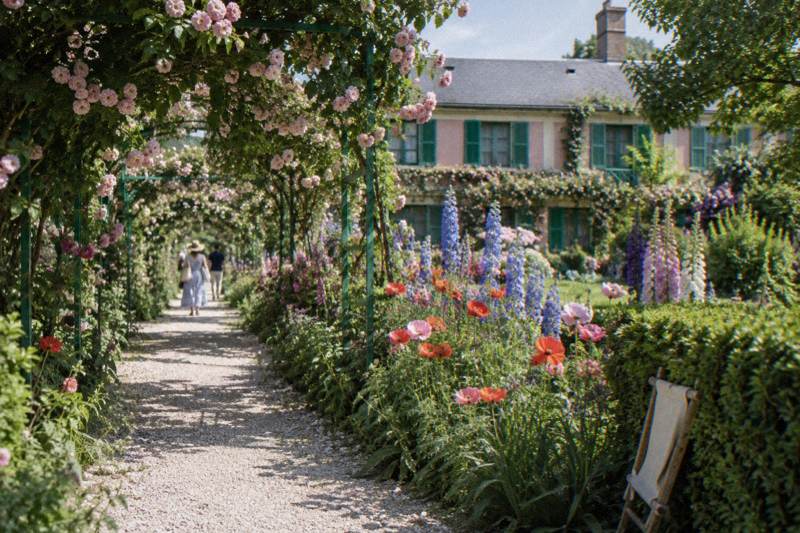
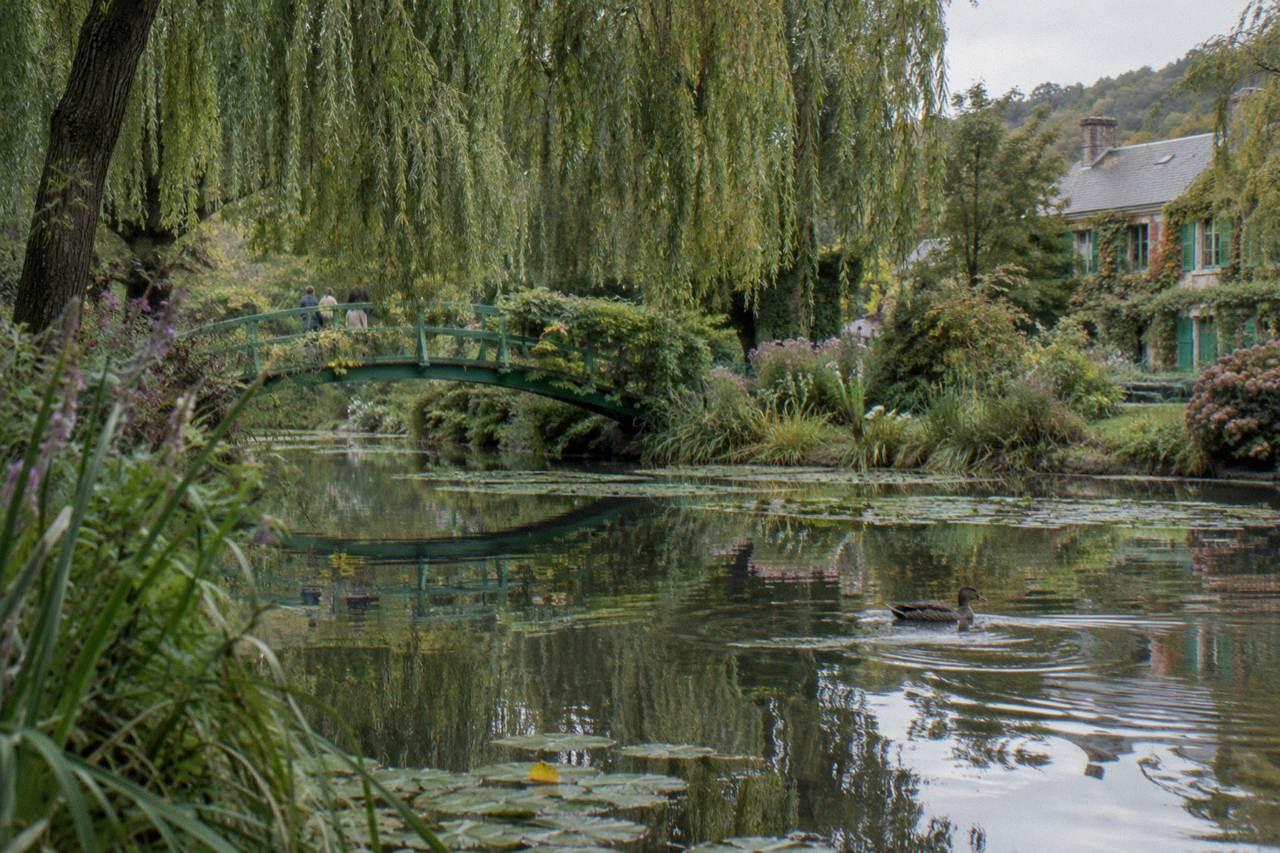
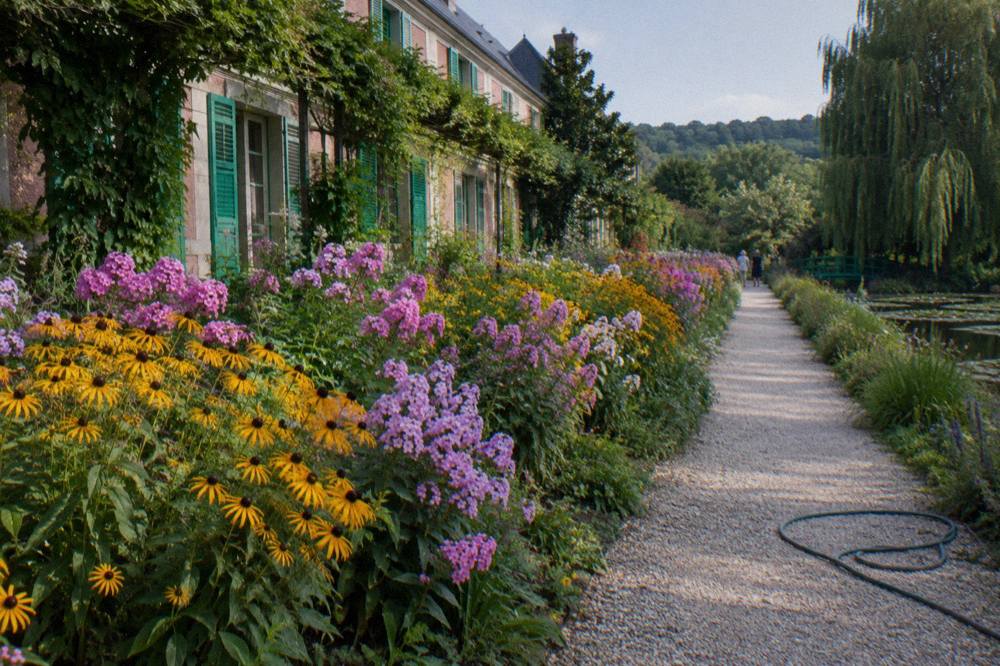
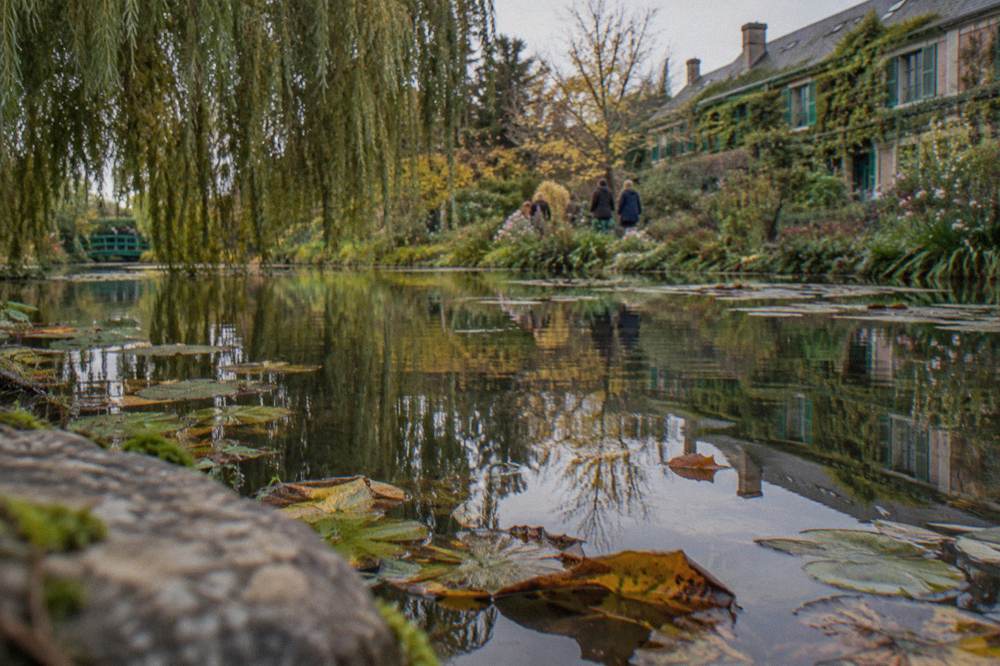
The Clos Normand is the first thing you meet: iron arches with climbing roses in early summer, long beds of tulips and narcissi in April, dahlias and asters by autumn. Monet designed it as a living composition, planting by color rather than by botanic category, and the gardeners replant it continuously through the season so there is always something in flower between the April opening and the 1 November close. Across the road, reached by an underpass, sits the water garden: the pond Monet created after 1893 when he diverted a branch of the Ru stream, the willows, the wisteria-hung Japanese bridge, and the water lilies he painted for the last decades of his life. Visitors who know the large nymphéas canvases tend to stop here longest, because the pond is small enough to take in at a glance yet was the subject of hundreds of canvases painted from its bank.
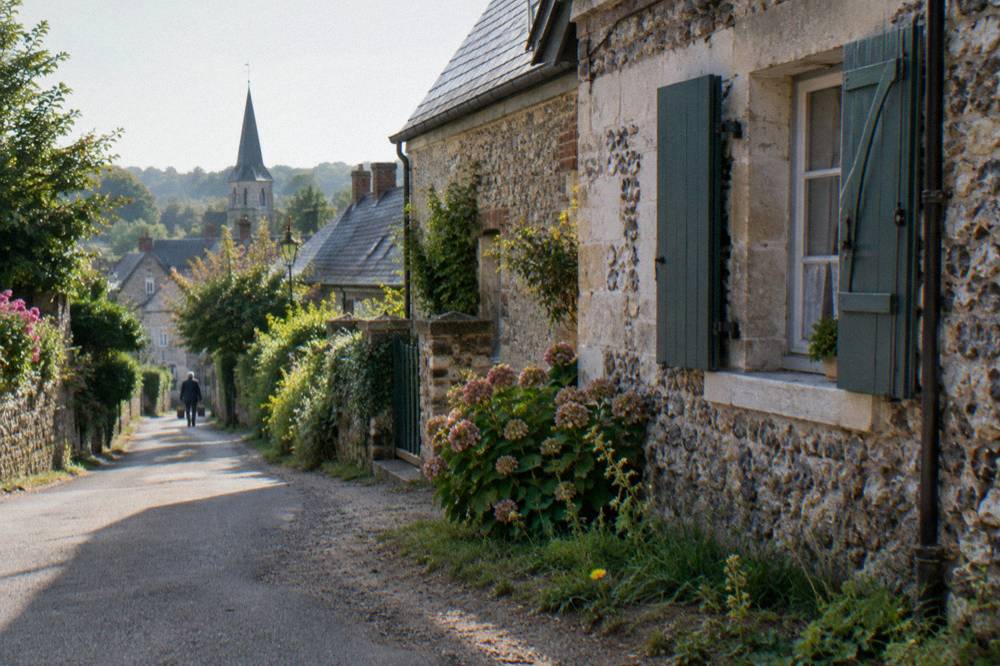
The house itself is a short walk through both: the blue kitchen, the yellow dining room, and the studio barn hung with reproductions. Visitors with no interest in Monet still tend to enjoy the pond and the village street, but the site rewards people who arrive knowing which paintings were made here. If Impressionism leaves you cold, that is the first sign that Giverny may not be your day. Most visitors fall on the other side of that line; if that sounds like you, start here.
There is a second sight in the village, the Musee des Impressionnismes, a ten-minute walk away, adult 12 euros, under 18 free, with a 2026 exhibition by Daniel Buren running 17 July to 1 November. Several guided tours pass the village church, where Monet is buried, without stopping inside the museums. Budget three to four hours in the village if you want the museum as well as the house, and check the museum page directly for its opening hours, which the listing does not state.
How Much Does The Whole Day Cost From Paris?
Entry to the house and gardens is 13 euros adult at the official rate, under 7 free, children 7 to 17 pay 7 euros, and organized coach tours from Paris start from $66 per person with entry included. The cheapest rail-and-ticket self-guided day, train plus shuttle both ways plus entry, lands well under that, but costs you planning time.
The coach route is the simple one. The half-day trip by coach from Paris, rated 4.5 from 3,546 reviews, runs from $66 per person for roughly 5 to 6 hours, transport and entry ticket included, departing from a stated central meeting point; hotel pickup is not listed on it. Step up and the small-group minivan tour rated 4.8 from 2,005 reviews runs from $148 per person for 4 hours 30 minutes with the entrance fee included, limited to 8 people. If you are already in Giverny under your own steam, the two-hour guided tour of the house and gardens with tickets, rated 4.8 from 794 reviews, runs from $66 per person. All three carry free cancellation as listed.
| Approach | Typical cost | What it includes | Rating where shown |
|---|---|---|---|
| Half-day coach from Paris | from $66 per person | Coach transport, entry ticket to Monet's house and gardens | 4.5 from 3,546 reviews |
| Small-group minivan, 8 max | from $148 per person | Minivan transport, entrance fee, guide | 4.8 from 2,005 reviews |
| Guided tour on site in Giverny | from $66 per person | Licensed local guide, entry tickets | 4.8 from 794 reviews |
| Train plus shuttle, self-guided | 13 euros entry plus train and shuttle fares | Nothing guided, full flexibility | not applicable |
The self-guided column deserves its own arithmetic. Entry at 13 euros, a shuttle at 5 euros one way or 10 euros return, and a regional train fare in the single-figure-to-low-double euro range together undercut every guided option, and the penalty is entirely in planning and timing risk rather than money. The train option has a full breakdown in the Paris to Giverny train guide. The official booking page for the house explains the ticket categories and the recommendation to book ahead on weekends, and it is the only place to buy official e-tickets: the official useful-information page. One caution carried over from that page: e-tickets are not refundable, and they are modifiable only under conditions until 30 April, firm and final from 1 May within the 2026 season.
Tour Or Train: Which Way Actually Works Better?
The train from Paris Saint-Lazare to Vernon-Giverny takes about 45 minutes to an hour, roughly 20 to 27 direct trains a day, then a 5 euro shuttle or a rented bike covers the last stretch. A tour costs more but compresses a five-hour loop into one decision; the train wins on price and timing freedom, the tour wins on not thinking.
The rail route is genuinely easy. Direct TER trains run from Saint-Lazare, and the official advice is to check timetables before buying because works are under way on the line. At Vernon-Giverny station the SN'go! shuttle, 5 euros one way and 10 euros return, runs April to November timed to trains, seats subject to availability, and bikes can be hired at the station for the traffic-free green way into the village. Free car parks serve drivers. The catch is friction: a missed shuttle, a works-disrupted timetable, or a sold-out online quota at the house can unravel a tightly planned day, and there is no tour rep standing on the platform to reroute you.
A tour absorbs that risk. The coach listings bundle the entry ticket, which removes the one step where self-guided travelers most often stumble: the online quota at the house can sell out on peak days, and once it does the official site warns of significant on-site waits. The trade is schedule: most half-day tours leave Paris early morning or early afternoon, and you are on the operator's clock, with the meeting point stated on each listing rather than a hotel collection. The train-versus-tour comparison works through the decision in detail for travelers who want it settled before booking anything.
Is a guided small-group premium worth roughly double the coach price? On the 8-seat minivan format, guests report the guide's commentary on Monet's life and the paintings adds something the gardens alone do not supply, and the rating pattern across the small-group listings, 4.4 to 4.8, backs that up. On a large shared coach with an audio guide option, the value case rests mostly on price, and the review counts on those listings show plenty of travelers are satisfied with exactly that trade.
Are The Crowds Really As Bad As People Say?
Crowds peak in May and June when the wisteria, irises and peonies flower, and stay heavy through July and August; the calmest visits are weekdays outside those months, at the 10:00 opening or after 16:00. The official site warns plainly that once the online ticket quota is reached, heavy attendance and a long wait are expected on site.
That warning is not boilerplate. The house sells timed e-tickets online and also sells tickets on site daily from 9:30, so the site never fully closes its gates, but the combination of a compact garden and a full quota is what produces the complaints in guest reviews. The pattern by month is consistent across sources: May and June draw the flower-driven peak, July and August add summer heat and school holidays, and September through late October thin out while dahlias, asters and autumn color keep the garden photogenic. Late October 2026 even saw the live crowd indicator on the official site reading fluid on some days.
None of this makes the crowded months a bad idea; it makes them a booking decision. The practical steps are simple: buy e-tickets in advance for weekends and public holidays, aim for a weekday if the itinerary allows, and pick the first or last admission window. The house's own guidance, reservation recommended on weekends and holidays, is the official position, and the crowd calendar by month is laid out in the Giverny crowds and queues guide. The underpass between the two gardens is the tightest pinch point at peak flow, so a calm start also buys you the pond before the crowds cross the road.
When Is Giverny Not Worth The Trip?
The house and gardens are closed every year from 2 November to 31 March, so any winter visit meets shut gates: the season published for 2026 runs 1 April to 1 November, daily 10:00 to 18:00. Beyond the calendar, Giverny underdelivers for travelers with no interest in Monet, no patience for crowds, or a Paris stay too short to spare five hours.
The closed season is the hardest limit and the most often missed. Travelers arrive in February expecting blossoms and find a village with a locked pink house. The date for the following season's reopening has not been published, so anyone planning beyond the current season should check the official page rather than assume April. Within the open season, the other disappointment trigger is expectation: Giverny is not Versailles. There is no palace interior, no hall of mirrors, no single monumental building; the experience is a garden, a house, and two or three hours of walking. Reviews that call the trip overrated almost always come from visitors who expected a grand monument and found horticulture instead.
The third category is logistical. If your Paris stay is two nights, a five-hour Giverny loop competes directly with the Louvre, the Orangerie's water lilies, and everything else on the list. A one-hour loop inside Paris, seeing Monet's nymphéas at the Musee de l'Orangerie, 12.50 euros online and closed Tuesdays, is the cheaper substitute, though it replaces walking through the real garden with viewing its paintings. There is also a rules-and-comfort dimension worth knowing before you commit: no picnics, no painting or drawing in the gardens, no animals except assistance dogs, no cloakroom and bag checks at the entrance, and the house itself is not wheelchair accessible even though the gardens are.
Do The Combination Tours Justify A Longer Day?
Adding Versailles, Auvers-sur-Oise or Rouen roughly doubles the day: combo listings run 8 to 11.5 hours and from $133 to $371 per person. They earn their keep when a second site is genuinely on your list; as a way to pad Giverny itself they just add hours of coach time.
The combinations split cleanly. Giverny plus Versailles is the classic pairing, coach listings running 9 to 11.5 hours from $144 to $230 per person, some with a three-course lunch included; the full comparison sits in the Giverny and Versailles tour guide. Note that Versailles Palace and Trianon are closed Mondays, which constrains the combo calendar. Giverny plus Auvers-sur-Oise follows Van Gogh instead of royalty: the full-day coach tour, rated 4.7 from 171 reviews at from $133 per person, includes entry to both the Van Gogh House and Monet's house, and the Maison de Van Gogh itself runs a Wednesday-to-Sunday season from 4 March to 22 November. Rouen variants add the cathedral Monet painted in series, with free time in the old city for lunch.
| Combination | Duration as listed | Price as listed | Second stop |
|---|---|---|---|
| Giverny and Versailles, coach with lunch | 9 hours 30 minutes | from $230 per person | Palace of Versailles, 3-course lunch |
| Giverny and Versailles, small group with lunch | 10 hours | from $371 per person | Palace of Versailles, groups up to 15 |
| Giverny and Auvers-sur-Oise, full day | 1 day | from $133 per person | Van Gogh House, Auvers-sur-Oise |
| Giverny, Vernon and Rouen, minivan | 8 to 13 hours | from $291 per person | Rouen and Vernon, hotel pickup listed |
The judgment call: a half day in Giverny alone satisfies most curiosity, and a combo is worth it only when the second site is a name you already wanted. A ten-hour day with two sights is a different product from a five-hour garden trip, and the reviews on the combo listings show it, with satisfaction tracking how much the traveler wanted Versailles rather than how much they liked Giverny.
The Verdict: Who Should Go And Who Should Skip It?
Go if you like Monet, gardens, or half-day escapes from a city, and you are visiting between April and October: the trip is short, the entry is 13 euros, and the pond is the real thing. Skip it in winter, skip it if paintings bore you, and think twice if your Paris stay is under three nights and every hour is spoken for.
For the traveler who paints, photographs, or simply wants to stand on the Japanese bridge, Giverny is among the easiest world-class sights to reach from a capital. The most reviewed listing on this site, the half-day coach trip from Paris rated 4.5 across 3,546 reviews at from $66 per person, exists precisely for that traveler, and its review pool is large enough to trust as a signal rather than a fluke. The small-group minivan format, 4.8 from 2,005 reviews, from $148 per person, suits anyone who wants a guide in a group of eight rather than a large shared coach.
For the skeptic, the test is simple: does standing in the garden that produced the water lilies sound interesting for ninety minutes? If the answer is no, no tour format will fix that, and the Orangerie in Paris will serve the same painter in less time. If the answer is yes, the remaining question is only logistics, and both the train and the tour routes are covered in detail across this site, starting with how to choose the best Giverny tour from Paris.
Whichever way you book, one habit protects the day: entry in hand before you travel. The official channel is the house's own site, and the shuttle operator's page, the SN'go! Giverny shuttle page, is the reference for anyone arriving by train. Both are worth a minute before the day itself.
Common Questions About A Day Trip To Giverny
Is Giverny worth visiting?
For most travelers, yes: Monet's house and gardens are a compact, walkable site with a real water lily pond, entry is 13 euros adult, and the trip from Paris takes about five hours return by coach or a 45-minute to one-hour train each way. It is least rewarding in winter, when the site is closed from 2 November to 31 March.
How many hours do you need in Giverny?
The house and gardens recommend 1h30 to 2h for the visit itself, unguided. Add village wandering or the Musee des Impressionnismes and a half day is comfortable; most tours from Paris budget around 5 hours door to door.
Can you do Giverny without a tour?
Yes. A direct TER train from Paris Saint-Lazare to Vernon-Giverny takes about 45 minutes to an hour, then the 5 euro shuttle or a station bike covers the last leg. Buy entry e-tickets in advance for weekends and holidays, since the on-site wait grows once the online quota is reached.
Is Giverny worth it in the rain?
The gardens remain open and the pond in particular reads well under gray light, but most of the visit is outdoors and the house has no cloakroom for wet large bags, which are banned. A rainy weekday is often calmer than a sunny weekend; a rainy peak Saturday is the worst of both.
Is Giverny good for kids?
Children under 7 enter the house and gardens free and 7 to 17 pay 7 euros, so cost is not the barrier. The site bans picnics and painting, exit is final, and the visit is a walk rather than an activity. The minivan small-group listings state a minimum age of 3 on one listing; for age policies on any specific tour, check the listing.