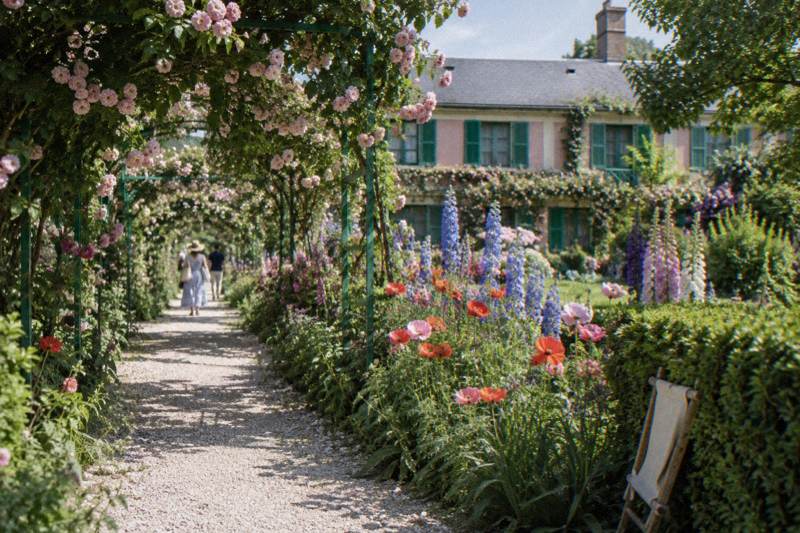
Where Is Giverny Located In France?
Giverny sits in the Eure department of Normandy, on the Seine near Vernon, about 75 km from Paris. Here is exactly where it is and how the maps, trains and tours connect.
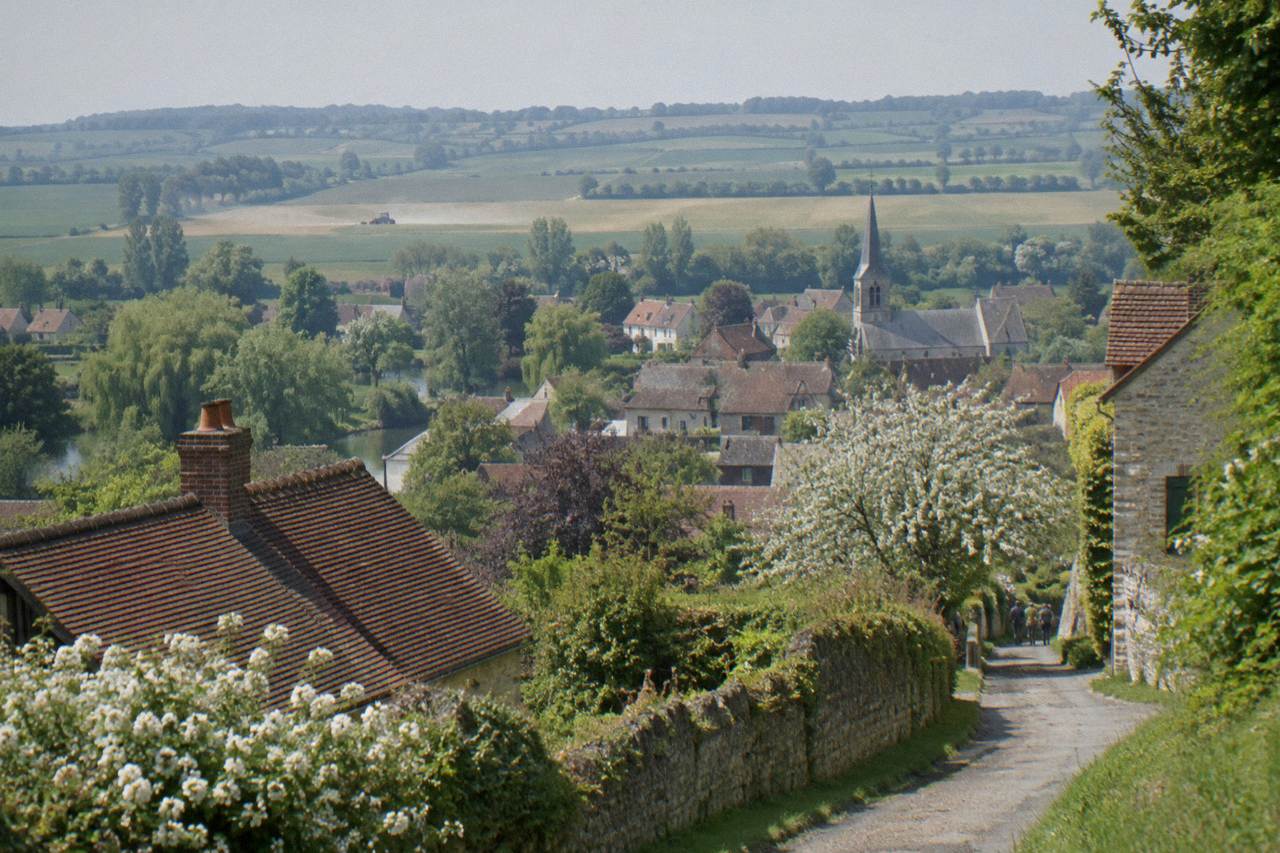
Giverny sits in the Eure department of Normandy, on the right bank of the Seine, roughly 75 km west of Paris, and the nearest station is Vernon-Giverny on the Paris to Rouen line. That single sentence answers the geography question, but the placement matters more than the map pin suggests. The village's position, close enough to Paris for a half-day trip yet deep in Norman countryside, is the reason it became the Impressionists' refuge in the first place, and the reason a coach tour can leave Paris after breakfast and have you standing in front of the water lily pond before noon.
This page locates Giverny precisely: the department, the river, the neighboring towns, the station, and the routes that connect it to Paris and the wider region. Along the way it explains why a reader who is still figuring out where the village is should care about tour listings at all. The short version: location drives every practical decision, and the half-day coach trip from Paris, from $66 per person and rated 4.5 from 3,546 reviews, exists almost entirely because the geography makes it possible.
What Region And Department Is Giverny In?
Giverny is in Normandy, in the Eure department, one of the five departments that make up the Normandy region of northwest France. The village sits on the right (north) bank of the Seine, a few kilometers upstream from the town of Vernon, and its postal address is 27620 Giverny, the 27 prefix being the Eure's department number. It is not in the Paris region, despite how easily it is visited from there.
Normandy's eastern edge begins well before the sea. Travelers often picture the region as cliffs and beaches, but Eure is inland Normandy: soft hills, river loops, apple orchards and farmland threaded by the Seine. Giverny sits in the valley of a small tributary, the Ru, which Monet diverted to create his water lily pond, so even the famous garden is a product of the local hydrography.
The department placement answers a common confusion. Some guidebooks and search results place Giverny "near Paris," which is true in travel time, roughly an hour by direct train from Paris Saint-Lazare to Vernon-Giverny, but administratively it has belonged to Normandy for centuries. That matters for things like regional transport pricing, since the trains are operated as Normandy TER services, and for understanding why the village feels like a different world from the capital despite the short hop.
For visitors comparing ways to cover the distance, the location also explains the shape of the tour market. Every listing on this site departs from Paris, because the village is close enough to the capital that a five-hour round trip with a garden visit is realistic. The most reviewed of them, rated 4.5 from 3,546 reviews, runs from $66 per person and includes entry to Monet's house and gardens along with coach transport from central Paris.
How Far Is Giverny From Paris?
The road distance from Paris to Giverny is about 75 km, and the direct TER train between Paris Saint-Lazare and Vernon-Giverny takes about 45 minutes to an hour, with roughly 20 to 27 trains a day on the line. In practice, counting transfers at each end, visitors should plan on the full journey taking between one and a half and two hours each way.
The distance is short enough that Giverny functions as Paris's countryside backyard. Coaches from the capital cover the route as part of half-day tours that last five to six hours in total, including time in the gardens. The half-day trip that stops at Monet's house and gardens lists a duration of 6 to 11.5 hours depending on whether Versailles is added, while the pure Giverny versions run closer to five.
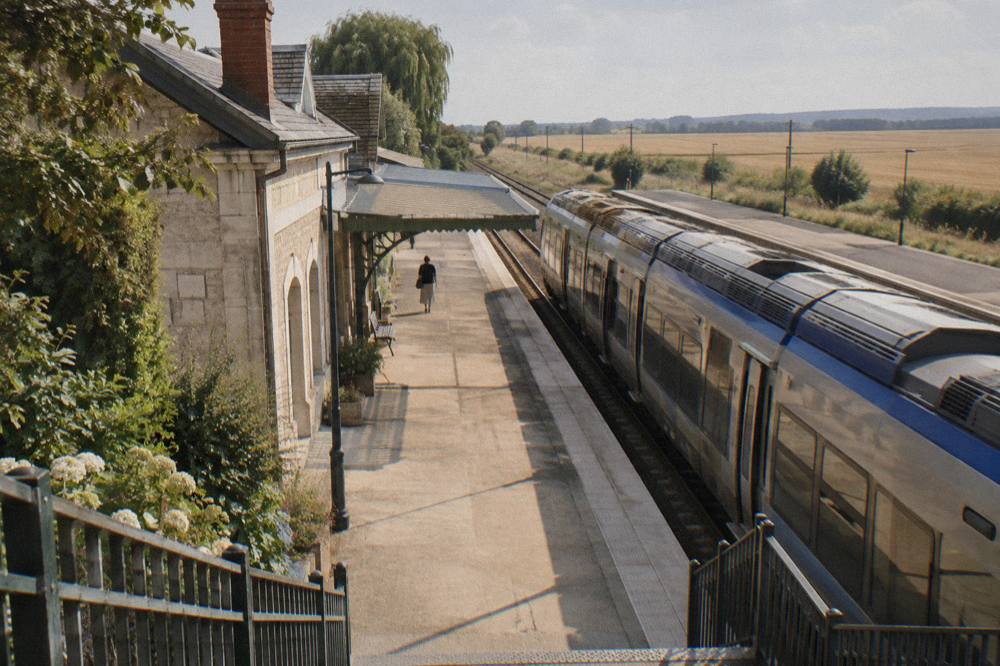
The rail route follows the Seine for much of the way, which is part of the pleasure of it. The line is the Paris to Rouen line, and Vernon-Giverny is one of its intermediate stops. Fares run about 6 to 24 euros depending on when and how you book, and the regional operator advises checking timetables before traveling because of works on the line, so the exact schedule is worth confirming on the day. A fuller breakdown lives in the guide to the train from Paris to Giverny.
Distances to neighboring anchor points help frame the map. The table below uses only the figures this site's research supports.
| From | To | Approximate distance or time |
|---|---|---|
| Paris (center) | Giverny | about 75 km |
| Paris Saint-Lazare | Vernon-Giverny station | about 45 minutes to an hour by direct TER |
| Vernon station | Giverny village | short shuttle or bike ride on the green way |
| Giverny | Vernon town | a few kilometers |
If reading a map and matching it to train timetables sounds like work you would rather skip, that is precisely what the guided options sell. The small-group half-day trip by minivan, rated 4.8 from 2,005 reviews and from $148 per person, includes entrance to Monet's house and gardens and a group capped at eight people, which is a different way of solving the same 75 km.
Which Train Station Serves Giverny?
Giverny has no station of its own. The serving station is Vernon-Giverny, on the Paris to Rouen rail line, about 45 minutes to an hour from Paris Saint-Lazare by direct TER train, with roughly 20 to 27 departures a day. From the station you still need to cover the gap to the village by shuttle, bus, bike or taxi.
The station is physically in Vernon, a market town on the Seine, and the "Giverny" in its name exists for tourist reasons. This trips up travelers who search for "Giverny station" in rail apps and find nothing. Searching for Vernon-Giverny, or simply Vernon, returns the correct stop on the Paris Saint-Lazare to Rouen line.
The train side of the journey is well covered elsewhere, including the comparison of whether a train or a tour suits you better, and the deeper question of how far Giverny is from Paris has its own article. What matters for locating the village is that the rail geography and the road geography do not meet: the station sits across the river and a few kilometers away from Monet's gate, and the last stretch is a separate decision.
How Do You Get From Vernon Station To The Village?
The SN'go! shuttle connects Vernon-Giverny station with Giverny village, costing 5 euros one way or 10 euros return, running April to November and timed to train arrivals, with seats subject to availability. Alternatives include bike hire at Vernon station and a ride along the green way, a dedicated cycle path to the village.
The shuttle is the standard answer for independent travelers. It exists because the volume of visitors heading from the station to Monet's garden justifies a dedicated service, and it runs on the same seasonal calendar as the garden itself, April to November. Seats depend on availability, so on busy days the bike option or a short wait can come into play.
The green way is the quiet alternative worth knowing about. Bike hire is available at Vernon station, and the cycle path runs directly to Giverny without mixing with main-road traffic, which makes the final leg of the journey part of the visit rather than a transfer to endure.
What Sits Around Giverny: Vernon, The Seine, And Normandy
Giverny is surrounded by the Eure countryside: the town of Vernon a few kilometers east on the Seine, rolling farmland and forest, and, further afield, Rouen downstream to the west and Paris upstream to the east. The Seine loops through the valley below the village, and several tours pair Giverny with Vernon's old mill for exactly this reason.
Vernon is the practical neighbor, the place with the station, hotels such as the Hotel Normandy near Vernon-Giverny station, and shops. It also has photogenic riverside sights, including the old mill on the Seine, and two listings on this site stop there alongside Monet's garden. One is the coach day trip with audio or live guide, from $66 per person, which lists stops at Monet's House and Gardens and Vernon. The other is the Monet day trip that continues to Rouen, from $291 per person, rated 4.7 from 26 reviews, which lists a photo stop at the old mill of Vernon and the Château des Tourelles.
The wider Normandy context places Rouen, the regional capital with its cathedral that Monet painted repeatedly, within day-trip range westward. One minivan tour covers Giverny, Vernon and Rouen in a single day, 8 to 13 hours, with hotel pickup listed and free time in Rouen for lunch. It is a reminder that Giverny's location is not just "near Paris" but at the eastern gateway of a region full of Impressionist painting sites.
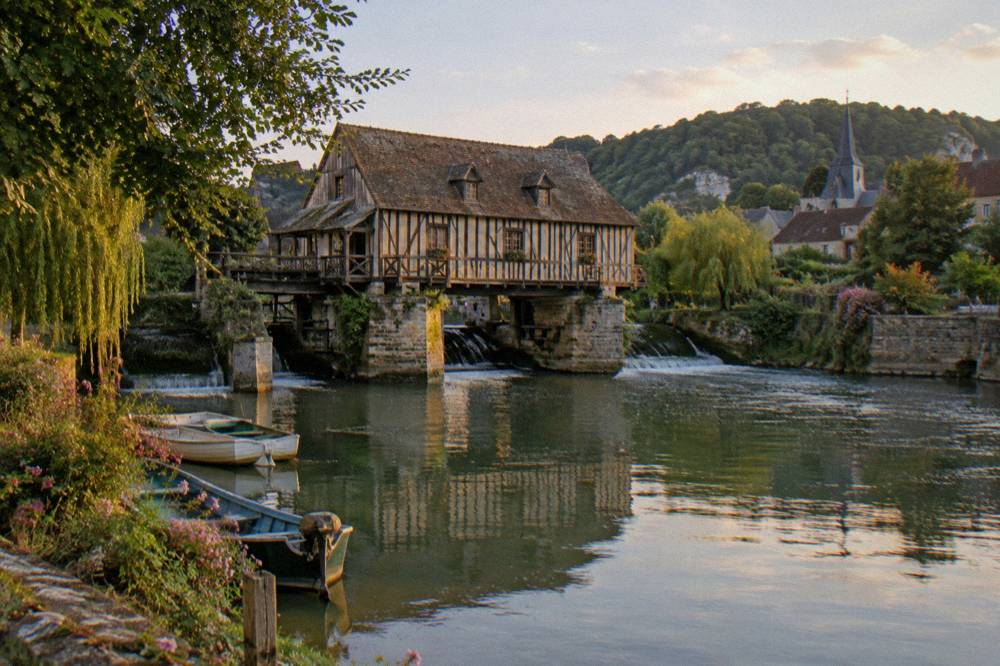
The Seine itself is the organizing feature of the whole geography. Monet lived on the Paris side of the river loop at Giverny for 43 years, but he painted the valley constantly, and the light on this stretch of water is a genuine part of what drew the Impressionists here in the first place.
Why Did Monet Settle In Way Out Here?
Claude Monet moved to Giverny in 1883, drawn by the village's light, its river valley setting and its cheap rural housing, and he stayed until his death, painting the gardens he built there for decades. The water lily pond followed after 1893, once he acquired the land across the road and diverted the Ru to feed it.
The location was not an accident of charm. Giverny when Monet arrived was an ordinary farming village with no museum, no monument and no industry, reachable from Paris but far enough to be quiet. Monet found the house on what is now rue Claude Monet, planted the Clos Normand flower garden in front of it, and later added the water garden with its Japanese bridge across the diverted stream.
Other painters followed him. In the years after his arrival an American colony of artists settled in and around the village, which is part of why the Musée des Impressionnismes Giverny exists there today, a short walk from the house, adult admission 12 euros, under 18 free. The museum's 2026 exhibition "Invitation to Daniel Buren, Plantations" runs 17 July to 1 November, per its official visit page.
Monet's house and gardens, at 84 rue Claude Monet, are open daily through the season, 10:00 to 18:00 with last admission at 17:30, and the recommended visit length is 1h30 to 2h. Full ticket details, including the adult price of 13 euros and the free entry for children under 7, are in the ticket guide, and the practical rules appear on the house's official information page.
Where Exactly Is Monet's House Within The Village?
Monet's house and gardens stand at 84 rue Claude Monet, on the village's single main street, with the Clos Normand flower garden in front of the house and the water lily pond across the lane behind it. The entrance is a short level walk from the village center and from the free car parks, and the walk from one end of Giverny to the other takes minutes rather than hours.
The village is genuinely small. Rue Claude Monet is the spine, lined with stone houses, and the garden entrance sits on it, with the restaurant Les Nymphéas directly in front of the house, open daily through the season. Two local guided products meet you right there rather than in Paris: the village walking tour with garden entrance, from $73 per person, rated 3.7 from 728 reviews, meeting at 80 rue Claude Monet, and the two-hour guided tour of the house and gardens, from $66 per person, rated 4.8 from 794 reviews, meeting at Restaurant Les Nymphéas. Both suit travelers staying locally in Vernon or Giverny, including guests at La Dime de Giverny, a guesthouse walkable to Monet's house, or Le Jardin des Plumes, a small upscale inn near the garden.
Orientation inside is simple once you are through the gate. The flower garden, the Clos Normand, runs from the house toward the road in ordered beds; the studio and the house itself hold the collection; and a short passage under the lane leads to the water garden with the pond, the bridge and the wisteria. Because exit is final and there is no cloakroom, large bags are banned, so arriving light matters as much as arriving early.
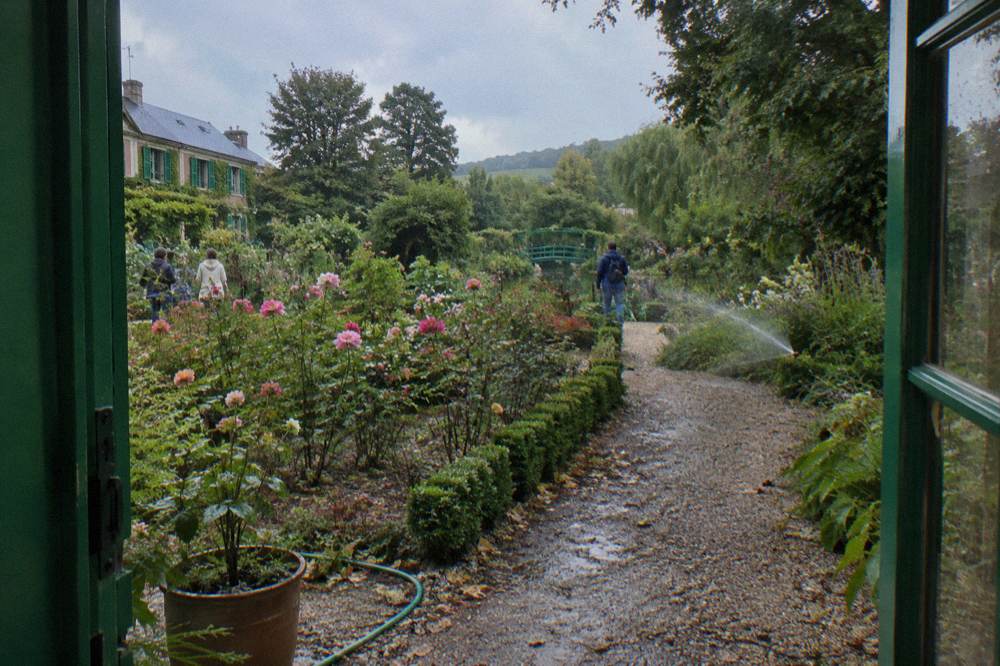
The geography also explains the timing advice. A recommended visit runs 1h30 to 2h, the village adds a short stroll to the church where Monet is buried, and the whole Giverny experience fits comfortably inside a half-day window, which is why the tours from Paris can return by mid afternoon.
Which Way Of Covering The Distance Suits You?
If the goal is simply to stand in Monet's garden with the least planning, a coach tour with entry included solves the 75 km in one booking: the half-day trip from Paris runs from $66 per person, rated 4.5 from 3,546 reviews. If you want a smaller vehicle and a capped group, minivan tours from $148 to $154 per person cover the same distance with eight or fewer travelers.
The comparison comes down to how much of the geography you want to manage yourself. A self-guided rail journey means buying train tickets, checking timetables for works on the line, and arranging the shuttle from Vernon, which is rewarding and cheap, about 6 to 24 euros for the train plus 5 euros for the shuttle each way. A tour folds the distance, the entry ticket and the timing into one product, departing from named central Paris points such as 45 Avenue de la Bourdonnais or 6 Avenue de Wagram.
The small-group minivan option with hotel pickup or a meeting point, from $154 per person and rated 4.7 from 769 reviews, lists pickup from hotels in western Paris or from a meeting point, one of the few listings that does. Its sibling small-group half-day trip, from $148 per person, rated 4.8 from 2,005 reviews, departs from 6 Avenue de Wagram with a group of eight maximum. Both include entrance to Monet's house and gardens.
For travelers combining the location question with a second destination, the geography again does the work: Versailles lies between Paris and Giverny on the western approach, which is why combined Giverny and Versailles listings run 9 to 11.5 hours. The dedicated Giverny and Versailles tour guide covers that pairing in detail.
Whatever you choose, pickup, group size, inclusions and duration all vary from listing to listing across the 31 options in the tour comparison, so compare the details before you book. A reader who now knows where Giverny is has done the first half of the planning; the second half is picking the vehicle.
There is also a middle path worth naming. The private tour segment exists for travelers who want the geography handled entirely: a private minivan trip from Paris, from $319 per person with hotel pickup listed, rated 4.7 from 32 reviews, includes 2 hours of free time in Giverny plus tickets and pickup. At the other end of the price scale, the audio-guide coach option keeps the cost at the $66 floor while still including entry. Distance is fixed; comfort is the variable you are buying.
Whichever direction you take, the location itself never changes the fundamentals. Giverny remains a Normandy village on the Seine, about 75 km from Paris, open daily through the garden season from early April to the start of November, with the following year's reopening date not yet published.
Common Questions About Where Giverny Is
Where is Giverny
Giverny is a village in the Eure department of Normandy, northwest France, on the right bank of the Seine about 75 km west of Paris, a few kilometers from the town of Vernon and its station Vernon-Giverny.
Is Giverny In Paris?
No. Giverny is in Normandy, in the Eure department, roughly 75 km from Paris. It is close enough for a half-day trip from the capital, but it is administratively and geographically in Normandy.
What Is The Closest Train Station To Giverny?
Vernon-Giverny station, in the town of Vernon, on the Paris Saint-Lazare to Rouen line. The direct TER train takes about 45 minutes to an hour from Paris, and the SN'go! shuttle covers the final stretch to the village for 5 euros one way, 10 euros return, April to November.
What Region Is Giverny In?
Normandy, specifically the Eure department, one of the region's five departments. The village sits inland, on the Seine valley, east of Rouen and west of Paris.
How Long Does It Take To Get From Paris To Giverny?
The direct train runs about 45 minutes to an hour from Paris Saint-Lazare to Vernon-Giverny, plus the shuttle or bike ride to the village. Coach tours list total durations of five to six hours for the round trip including the garden visit.
Can You Visit Giverny Without A Car?
Yes. The standard car-free route is the direct TER train to Vernon-Giverny station followed by the SN'go! shuttle, or bike hire at Vernon station and the green way path to the village. Guided tours from Paris also require no car.