How Monet Made Giverny: The Garden He Painted For 43 Years
Monet moved to Giverny in 1883, rented a pink plaster house on the main road, and then spent forty three years turning ordinary Normandy farmland into one of the most painted gardens on earth.
Short answer
Claude Monet arrived in Giverny in 1883 and lived there until his death, painting the garden for 43 years. He built the water lily pond after 1893 on a plot across the railway. The house and gardens open 1 April to 1 November 2026, 10:00 to 18:00, adult entry 13 euros.
Giverny was a farming village of a few hundred people when Claude Monet spotted it from a train window in 1883. He rented the pink plaster house on the main road that same year, and what began as a rental became a forty three year project: a garden designed, dug and replanted by a painter who wanted a subject he would never finish. The house and the two gardens he built there are open to visitors today, from 1 April to 1 November 2026, and the story of how they came to be explains why the place looks the way it does.
The facts of that story are unusually well documented. Monet moved in 1883; the water lily pond was created after 1893, once he had bought the marshy meadow across the local railway line and diverted a branch of the Ru, a small Seine tributary. He painted the garden for decades, and the garden he made is the one you walk through now. This page covers the history in order, then connects it to the practical question every reader arrives with: how to get from Paris and which of the listed tours actually puts you inside the garden with time to look.
Why Did Claude Monet Move To Giverny In 1883?
Monet moved to Giverny in 1883 with his family and stayed for the rest of his life, renting first and buying the house later, once his paintings began to sell steadily. He chose the village for its light, its river valley scenery and its distance from Paris, roughly 75 km away, close enough to reach dealers and far enough to work undisturbed.
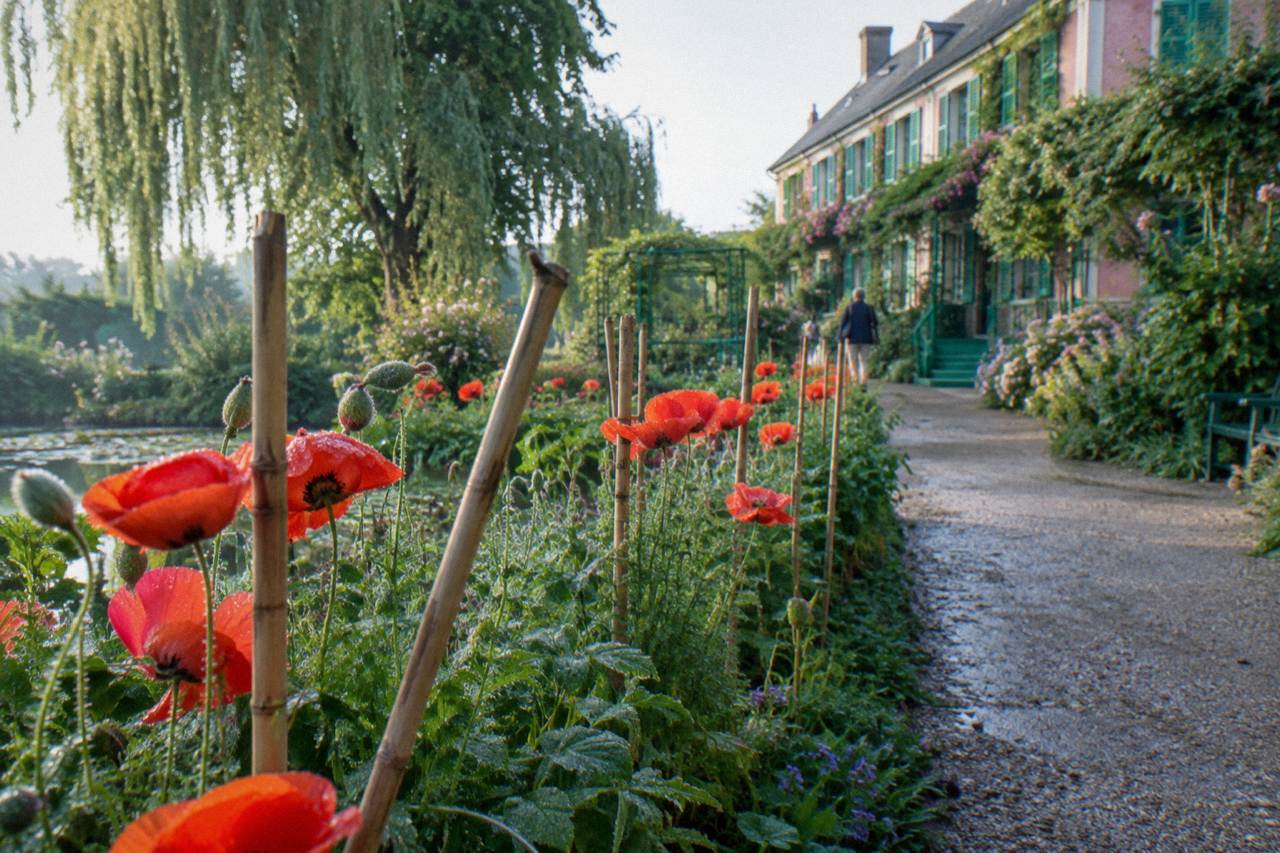
The painter was in his early forties when he arrived, and by the standards of his earlier life he was settling down. Giverny gave him the Normandy landscape he had been painting since his youth, the Seine a short walk away and soft valley light that changes hour by hour. The house sat on the main road through the village, with a walled kitchen garden in front and, beyond the railway embankment, the damp meadow that would later hold the pond.
What made the move consequential was not the house but Monet's attitude to land. He did not treat the garden as decoration. Within a few years he was tearing out the symmetric kitchen plots the previous owners had kept and replacing them with flower beds laid out for color rather than for food. Neighbors reportedly found this eccentric. He planted flowers the way another painter mixes pigments, and he kept at it, season after season, for the rest of his life.
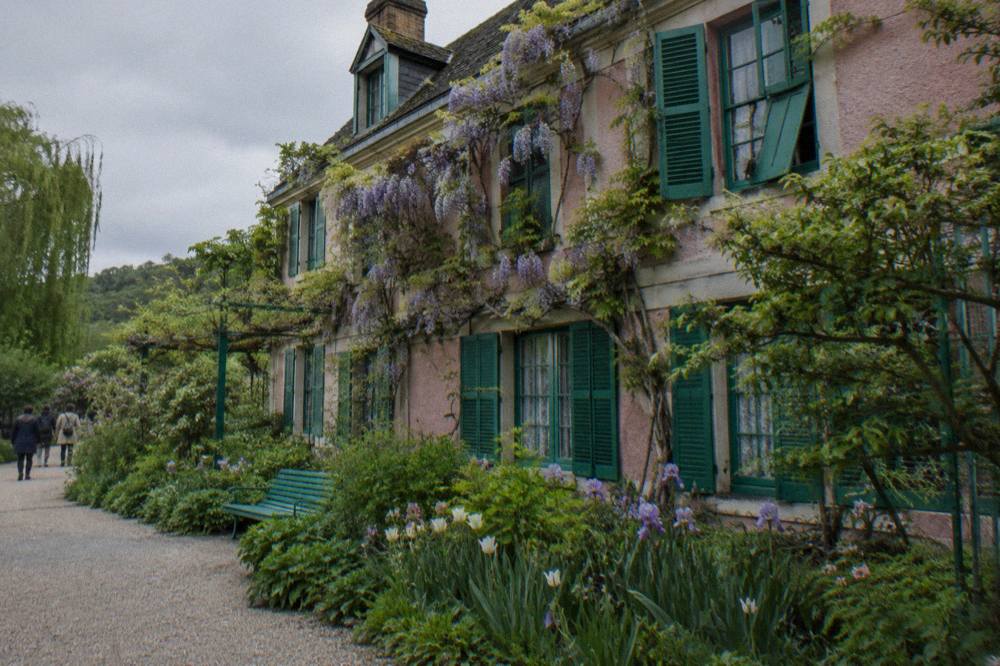
The years matter because the garden is a document of them. The Clos Normand, the flower garden directly in front of the house, is the earlier project. The water garden across the road, with the pond and the Japanese bridge, came later, after 1893, and it marks a turn in the paintings too: from garden views to the water surface itself, reflections, sky and the floating lilies that occupied his final decades. To see how those decades of painting shaped the garden's reputation, read what makes Monet's garden at Giverny so famous.
How Did Monet Build The Garden At Giverny?
Monet built his garden in two stages: the Clos Normand flower garden in front of the house from 1883 onward, and, after acquiring the flooded meadow across the railway, the water lily pond dug after 1893. He imported plants, exotic water lilies among them, planted thousands of flowers in drifts by color, and designed the whole garden as compositions he could paint from set viewpoints.
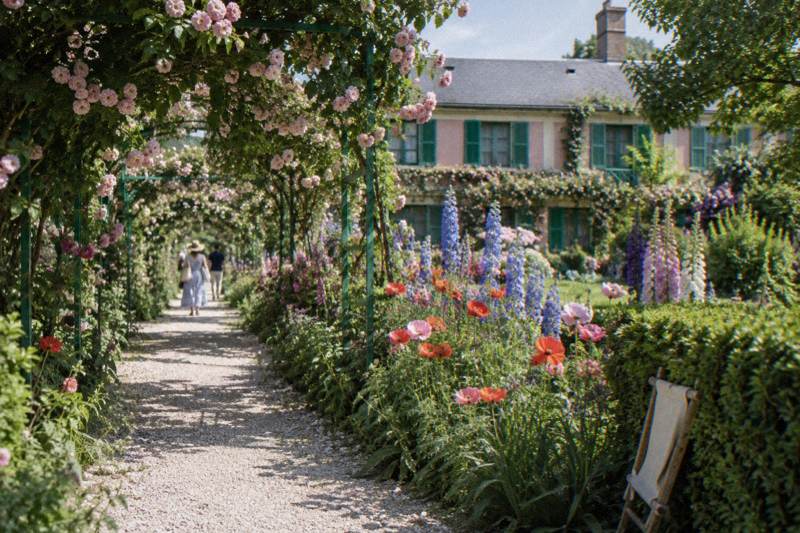
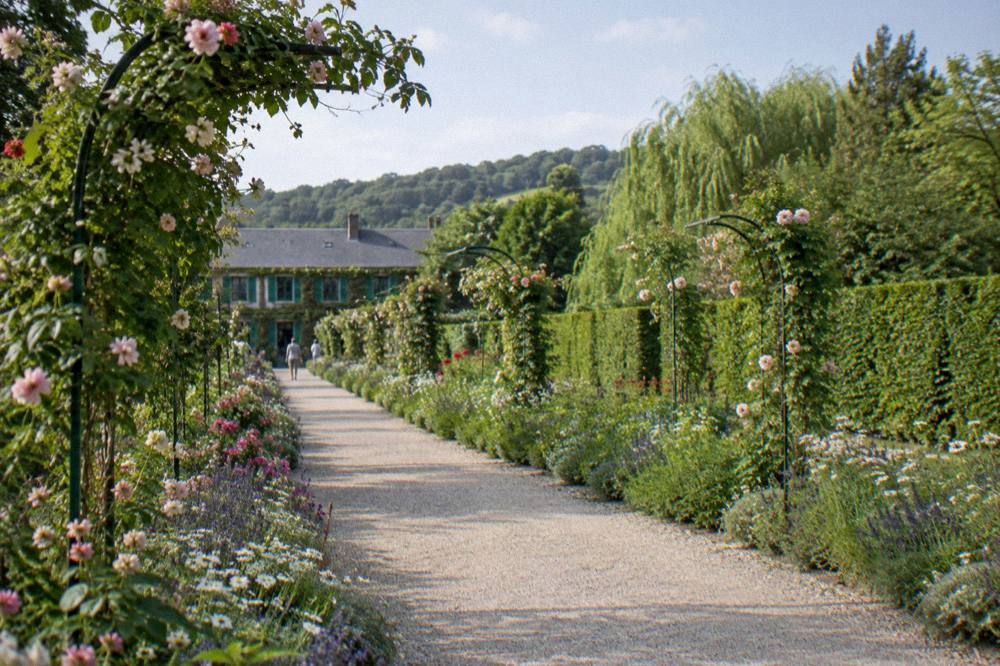
The Clos Normand is roughly a hectare of beds laid out in long perspectives. Monet planted for massed effect: tulips and narcissi in April, irises and peonies in May, roses climbing iron arches in June, dahlias and nasturtiums into autumn. The central allée, the Grande Allée, is the garden's spine, and in late summer the nasturtiums are allowed to carpet it, a famous effect the gardeners still maintain.
The water garden came about by acquisition. After first renting and then purchasing the property south of the railway, Monet bought the marshy plot beyond it, diverted water from the Ru through it and had the pond dug. He planted it with water lilies, including imported varieties, ringed it with willows, bamboo and liquidambar, and built the arched Japanese bridge covered in wisteria. Local authorities initially objected to the water diversion; the project went ahead, and the pond became the single most painted view on the property.
The official site of the house, claudemonetgiverny.fr, describes the visit as a free, unguided walk through both gardens and the house, with a recommended visit time of 1h30 to 2h. That recommended window is worth trusting: the garden is not large, but the views Monet composed reward standing still, which is what a guide helps first time visitors do.
The two hour guided tour inside the garden, at from $66 per person, pairs a licensed local guide with entry tickets and suits anyone arriving in Giverny independently. The small group minivan trip from Paris, from $148 per person and rated 4.8 from 2,005 reviews, handles the transport as well. The half day coach trip, from $66 per person and the most reviewed listing at 4.5 from 3,546 reviews, is the budget route with the audio guide doing the explaining.
What Does The Water Lily Pond Look Like When You Visit?
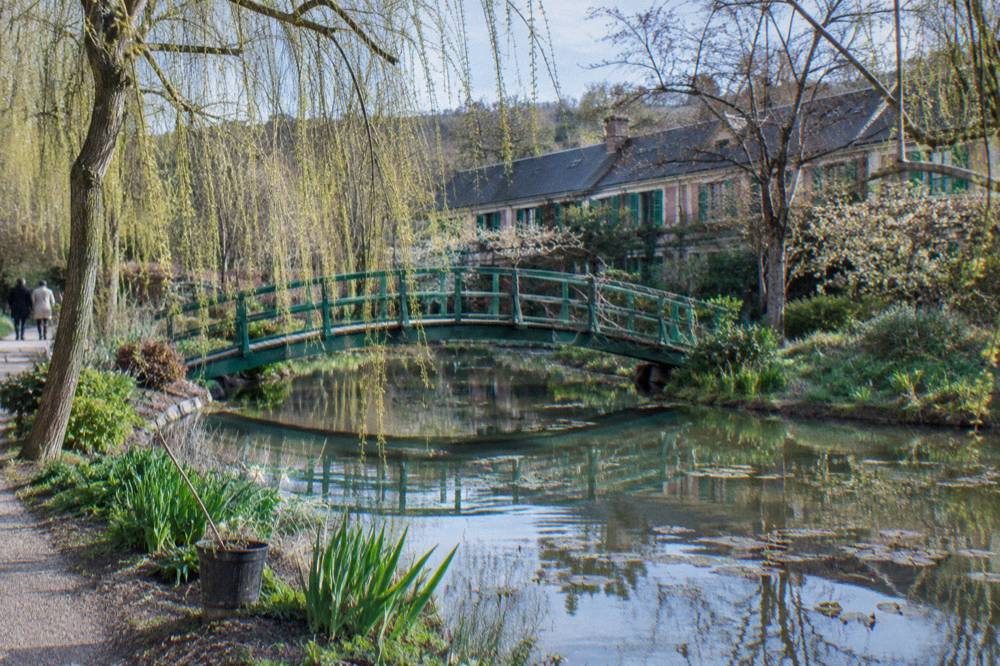
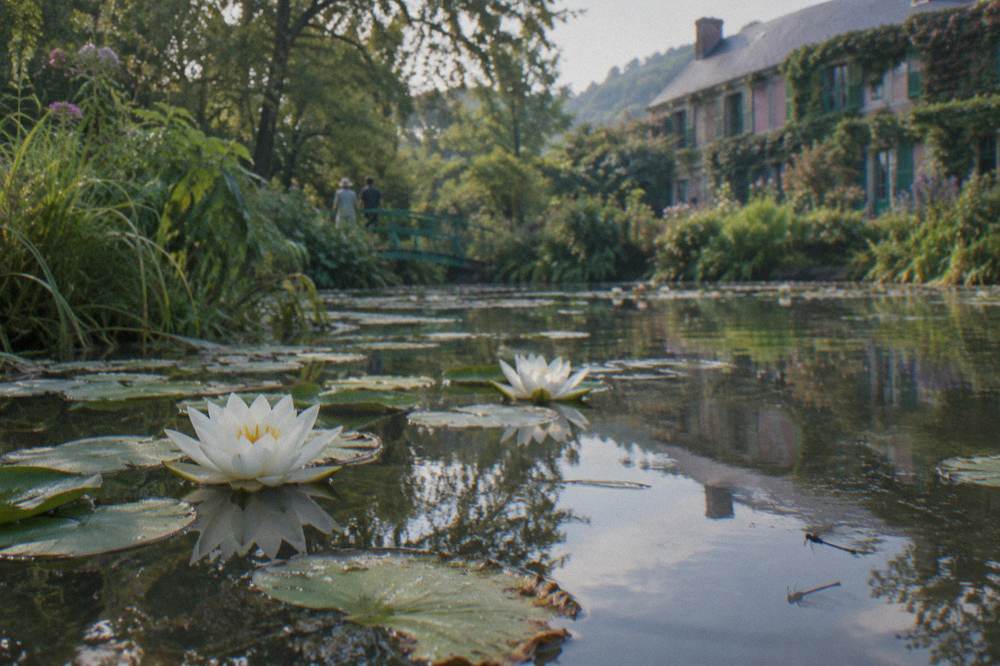
The pond is smaller than the paintings suggest, ringed by willows and bamboo, with the green arched Japanese bridge at one end and water lilies covering much of the surface in summer. The bloom follows the season: water lilies typically begin opening in July, peak from late June through August in most years, and continue appearing into September and October in milder conditions.
First time visitors often say the pond feels compact after the vast canvases. Monet painted it close up, at water level, from positions he chose precisely. The bridge appears in the late paintings with wisteria hanging from it in May, and the whole composition, bridge, water, reflected sky, is exactly what he framed. Standing where he stood is the point of the visit, and it explains why the garden rewards slow looking rather than a quick circuit.
The bloom pattern is a general seasonal rhythm rather than a promise for any given week. Weather moves it. Heat waves in recent seasons damaged some plantings, including an unusual loss of nasturtiums one October, while the water lilies themselves kept thriving. The seasonal pattern below reflects what the gardeners and garden calendars describe across a typical year, and the month by month detail, including which flowers carry which weeks, is covered in the site's dedicated best month to visit guide.
The two hour guided visit deserves its own word here because it is the listing most directly tied to this history. It meets at Restaurant Les Nympheas, 109 Rue Claude Monet in Giverny village, in front of the house itself, includes entrance tickets for the gardens and house, and pairs them with a licensed local guide, from $66 per person, rated 4.8 from 794 reviews. It does not include transport to Giverny, so it fits the independent traveler arriving by train through Vernon, a route the site covers in detail in the train guide from Paris.
What Blooms In Monet's Garden Through The Season?
Across a typical season the garden moves from tulips and narcissi in April, through irises, peonies and wisteria in May, roses in June, dahlias and full water lilies in July and August, to asters, chrysanthemums and autumn foliage in September and October. The house and gardens are open daily from 1 April to 1 November 2026, 10:00 to 18:00, with last admission at 17:30, and closed the rest of the year.
The spring opening in April is the bulb season: tulips, daffodils, pansies, forget me nots, hyacinths and the early blossom of the cherry and crab apple trees. May brings the irises to their mid month peak, the peonies, and the wisteria on the Japanese bridge, which is the photograph many visitors come for. May and June together are the busiest weeks of the season for exactly this reason, as the crowds and queues guide explains in detail.
Summer belongs to the roses on the iron arches of the Grande Allée, the clematis and the first nasturtiums in June, then the dahlias, sunflowers and gladioli of July and August alongside the water lilies at their fullest. By September the nasturtiums carpet the central allée and the asters and autumn crocuses take over, and October closes the season with chrysanthemums, the last dahlias and the foliage color on the willows and liquidambars before the gates shut for the winter on 1 November.
| Month | Typical display | Notes for visitors |
|---|---|---|
| April | Tulips, daffodils, pansies, hyacinths, blossom | Season opens 1 April; bulbs carry the month |
| May | Irises peak mid month, peonies, wisteria on the bridge | Among the busiest weeks of the year |
| June | Roses on the arches, clematis, poppies, first water lilies | Crowds remain high |
| July | Dahlias, sunflowers, gladioli, water lilies in full | Hot days; garden is at its densest |
| August | Dahlias, cosmos, hibiscus, water lilies | Very busy; book entry ahead on weekends |
| September | Nasturtiums carpeting the allée, asters, autumn crocuses | Quieter as schools return |
| October | Chrysanthemums, asters, autumn foliage, last water lilies | Season closes 1 November |
Tickets for the house and gardens cost 13 euros for adults, 7 euros for children 7 to 17, and children under 7 enter free, with student and disabled rates available and free categories granted on site with proof. Booking is recommended for weekends and public holidays rather than mandatory, and tickets are also sold on site daily from 9:30, though once the online quota is gone, the official site warns of heavy crowds and a long wait. The full ticket detail, including the combined tickets with the Paris museums sold on site only, is in the tickets guide.
How Do You See Monet's Giverny Today From Paris?
The two practical routes are the direct TER train from Paris Saint-Lazare to Vernon-Giverny, taking about 45 minutes to an hour with roughly 20 to 27 trains a day, followed by the 5 euro one way SN'go! shuttle to the village, or a listed tour that handles transport and entry together from roughly $66 per person upward.
The independent route is straightforward and cheap. The train runs direct on the Paris to Rouen line, and because of works on the line you should check timetables before buying. At Vernon-Giverny station the shuttle to Giverny village costs 5 euros one way or 10 euros return, runs April to November timed to trains, and seats are subject to availability. Bike hire at Vernon station and the traffic free green way offer a third option, and there are free car parks in Giverny if you drive. The detail lives in the train or tour comparison.
The listed tours cover a wide spread of format and price. The half day coach trips from Paris, including the audio guide option at from $66 per person, 5 hours, rated 4.2 from 3,032 reviews, are the entry point. Small group minivans, such as the 8 seat trip rated 4.8 from 2,005 reviews at from $148 per person, cost more and move in smaller groups. The guided minibus day trip at from $145 per person, rated 4.7 from 896 reviews, adds a guide's commentary. Which format suits you is the real decision, and the site's Giverny tour comparison walks through it.
| Way to reach Giverny | Route | Cost | Duration |
|---|---|---|---|
| Direct TER train plus shuttle | Paris Saint-Lazare to Vernon-Giverny, then SN'go! shuttle to the village | Train about 6 to 24 euros; shuttle 5 euros one way, 10 euros return | Train about 45 minutes to an hour; shuttle runs April to November |
| Half day coach trip from Paris | Coach from 45 Av. de la Bourdonnais, entry ticket included | From $66 per person | 5 hours |
| Small group minivan trip | Minivan limited to 8, guide and entry included | From $148 per person | 4 hours 30 minutes |
| Guided minibus day trip | Minibus from 6 Av. de Wagram, small group entry included | From $145 per person | 5 hours |
| Car, free parking | Drive from Paris, about 75 km | Free car parks in Giverny | Drive time not stated on the listings |
For travelers who want the guide's knowledge applied to the history on this page, the small group half day trip above is a strong fit. It runs in groups limited to 8, departs from 6 Av. de Wagram in the 8th arrondissement, lasts 4 hours 30 minutes, and includes transport by air conditioned minivan, an expert guide and chauffeur, and the entrance fee, from $148 per person. The listing does not confirm hotel pickup, so check the listing for that detail before booking. Free cancellation is listed.
What Do The Tours That Visit Monet's Garden Include?
Inclusions vary listing by listing: some coach trips include the entry ticket and a guide or audio guide, small group minivans typically include transport, a driver guide and entry, and combo days add Versailles or the Van Gogh village at Auvers sur Oise. Every listing on this site shows free cancellation, and lunch is included only where the listing says so.
Because so many Giverny products look alike, the differences are worth naming. The half day trip combining Giverny with Versailles as a full day runs 11.5 hours from $144 per person, rated 4.5 from 1,591 reviews. A version with a three course lunch included, from $230 per person, rated 4.2 from 2,021 reviews, sits at the comfort end of the coach range. The full day to Giverny and the Van Gogh village at Auvers sur Oise, from $133 per person, rated 4.7 from 171 reviews, includes entry to both Monet's house and the Van Gogh House, and suits readers drawn to the painting history more than the palace.
| Tour | Format | Duration | Price | Rating |
|---|---|---|---|---|
| Half day trip with audio guide or live guide | Coach, shared | 5 hours | From $66 per person | 4.2 from 3,032 reviews |
| Small group half day trip from Paris | Minivan, up to 8 | 4h30 | From $148 per person | 4.8 from 2,005 reviews |
| Guided day trip to Monet's garden | Minibus, shared | 5 hours | From $145 per person | 4.7 from 896 reviews |
| Giverny and Versailles guided day trip | Coach, shared | 11.5 hours | From $144 per person | 4.5 from 1,591 reviews |
| Versailles Palace and Giverny with lunch | Coach, shared | 9h30 | From $230 per person | 4.2 from 2,021 reviews |
| Giverny and Van Gogh village full day | Coach, shared | 1 day | From $133 per person | 4.7 from 171 reviews |
| Monet's house and gardens guided tour in Giverny | On site, shared | 2 hours | From $66 per person | 4.8 from 794 reviews |
Two cautions apply across all of them. First, hotel pickup is only offered where the listing states it: the small group trip with pickup, from $209 per person in groups up to 6, lists hotel pickup and drop off, while the coach trips meet at stated points in central Paris. Second, the Fondation Claude Monet sells its own skip-the-line e-ticket online, with last admission at 17:30 and non-refundable e-tickets, so that wording on a listing can reflect a real product; the official site recommends booking ahead for weekends and holidays. The house itself is not wheelchair accessible, though the gardens are accessible to reduced mobility visitors, a distinction the access guide covers fully.
The full day Van Gogh village trip above is the listing that most extends the story told on this page. It pairs Monet's house and gardens, entry ticket included, with the village where Van Gogh spent his final weeks, including the Van Gogh House entrance and his resting place, with an English speaking escort on the coach, from $133 per person. For readers whose interest is the painters rather than the palace, it is the natural choice, and the deeper comparison lives in the Auvers sur Oise guide.
Where Does The Story End And The Visit Begin?
Monet lived in Giverny until his death, and the house and gardens passed through neglect and restoration before reopening to the public; today the Fondation Claude Monet operates the site, the Academie des beaux arts owns it, and the visit follows the layout Monet himself created: the Clos Normand, the house and studio, the tunnel under the road, and the water garden with the pond.
The restoration is part of the story visitors walk through. After decades when the gardens were largely abandoned, they were replanted using photographs, paintings and garden records, so the allées, the color drifts and the pond's planting follow Monet's own design closely. The Japanese bridge you cross is a reconstruction of the one in the paintings, and the studio where he worked on the large water lily canvases is part of the visit.
A short walk from the gates, the Musee des Impressionnismes Giverny covers the American painters who followed Monet to the village, and its 2026 exhibition "Invitation to Daniel Buren, Plantations" runs 17 July to 1 November; entry is 12 euros adult, 9 euros reduced, under 18 free, and its hours are on the museum's own page. A combined ticket with the Monet house, 25 euros for adults, is sold on site only, which makes the pairing a same day decision rather than something to prebook online.
That closing walk, garden to museum, is a good shape for a day. Arrive early or after 16:00, the quieter ends of the day, give the house and gardens their recommended 1h30 to 2h, then use the village itself, the church and Monet's grave a few minutes up the hill, and the museum to fill the rest. The Giverny planning pages cover each piece of the outing, from transport to lunch, including the season and opening hours detail and the Vernon stop that several coach tours include.
One more listing earns a mention for the guided format in a small vehicle: the minibus day trip from 6 Avenue de Wagram, from $145 per person, 5 hours, rated 4.7 from 896 reviews, which includes small group entry to the gardens and entry to Monet's house, with commentary on the drive. It suits a traveler who wants the history explained door to door without a coach full of fellow passengers.
However you arrive, the garden repays knowing what you are looking at. The pond Monet dug after 1893, the allée he planted to carpet itself with nasturtiums, the bridge he rebuilt and repainted, all of it was made by hand, on purpose, by a man who lived there 43 years and never ran out of subject.
Common Questions About Monet And Giverny
When did Claude Monet move to Giverny?
Monet moved to Giverny in 1883, first renting the pink plaster house on the main road and later buying it. He lived and painted there for the rest of his life, a span of 43 years.
When was the water lily pond built?
The pond was created after 1893, once Monet had acquired the marshy meadow across the railway line and diverted a branch of the Ru through it. He planted it with water lilies, including imported varieties, and built the Japanese bridge over it.
Can you visit Monet's house and garden in Giverny?
Yes. The house and gardens are open every day from 1 April to 1 November 2026, 10:00 to 18:00, last admission 17:30. Adult entry is 13 euros, and booking is recommended for weekends and public holidays. The 2027 reopening date has not been published, so check the official page for next season.
How long did Monet paint his garden?
He painted the garden for decades, from his arrival in 1883 until his death in Giverny, a total of 43 years. The water lily paintings of his final decades all use the pond he built after 1893.
Do tours from Paris include entry to Monet's garden?
Most listed tours include the entrance ticket, but check each listing: the half day coach trips, the small group minivan trips and the guided tours generally list entry among the inclusions, while food and hotel pickup are included only where the listing states it.
What is the best month to see the water lilies?
As a general seasonal pattern, water lilies begin opening in July, peak from late June through August, and can continue into September and October in milder conditions. Exact bloom in any given week varies with the weather, so treat the calendar as a rhythm, not a promise.