What Is The Story Behind Monet's Water Lily Pond?
Monet built his water lily pond at Giverny after 1893 by diverting a stream, then painted it for the rest of his life. Here is how the garden came to be and how to see it.
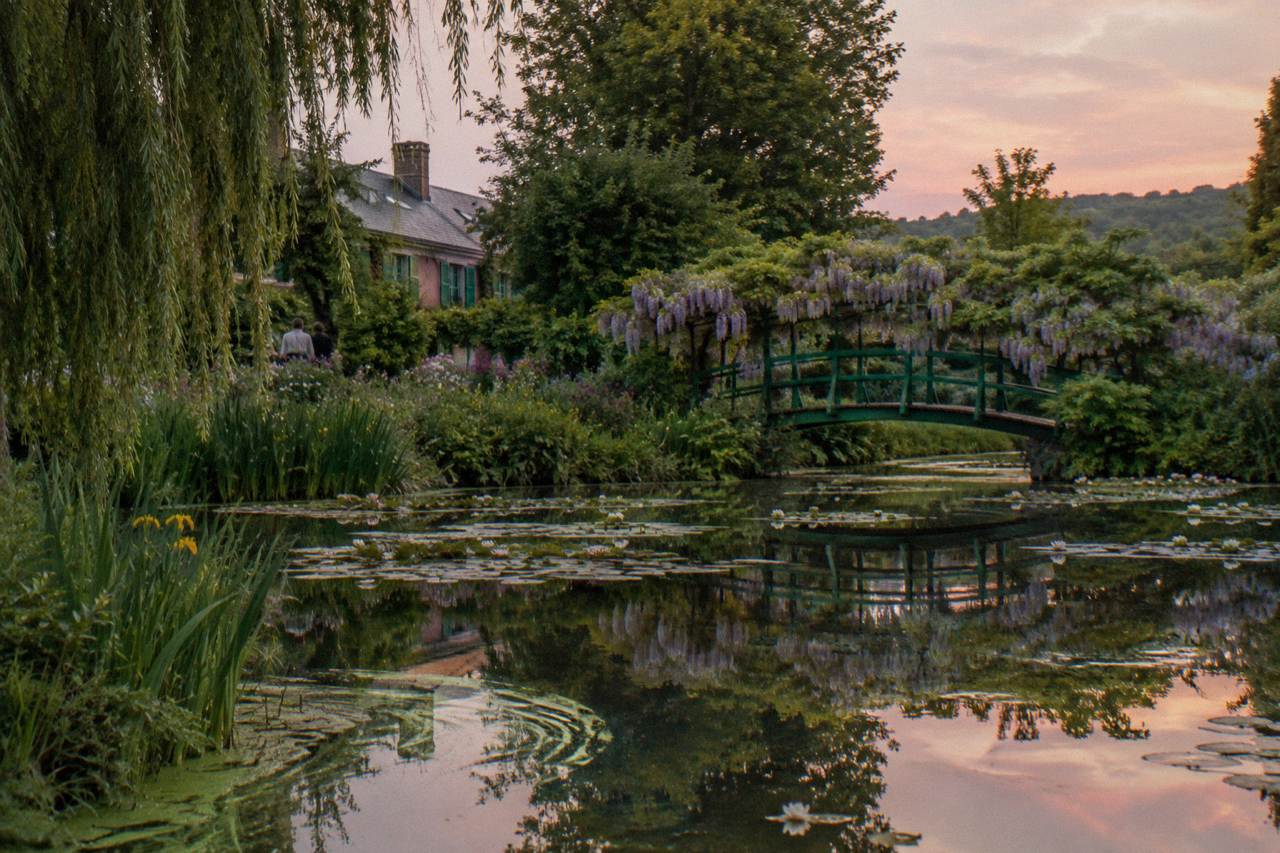
The water lily pond at Giverny is not a natural feature that Monet happened to find. It is a made thing, planned, financed, argued over and dug into a wet field at the bottom of his property while neighbors and the local authorities looked on with suspicion. Every painting in the Water Lilies cycle, from the earliest canvas to the vast decorations now in the Orangerie in Paris, descends from that one act of landscaping. The pond's story explains why the garden looks the way it does today, why the Japanese bridge sits where it sits, and why the water lilies themselves peak in a particular stretch of the summer.
When Did Monet Build The Water Garden At Giverny?
Monet moved to Giverny in 1883, and the water lily pond came a decade later: he bought the marshy plot across the local railway in 1893 and had the pond dug after that, once he had secured permission to divert water from the Ru, the small stream that feeds the site. The flower garden around the house came first, the water garden second, and the two halves together are what visitors walk through today.
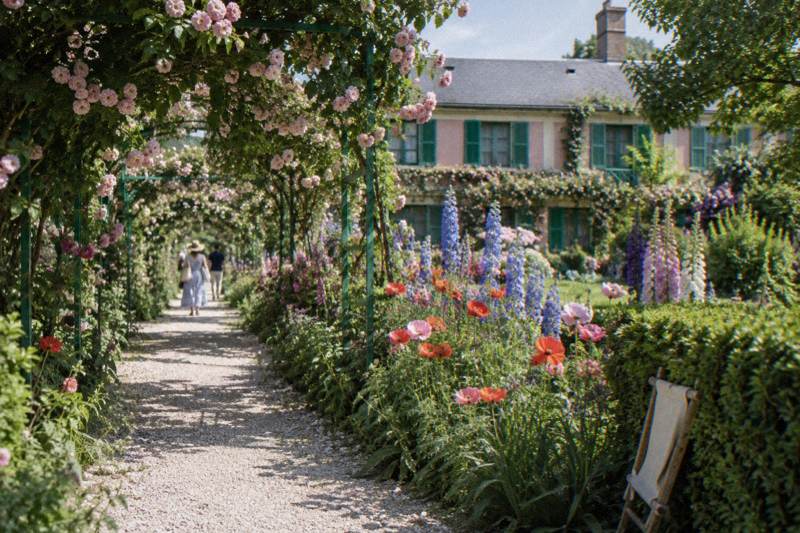
The sequence matters. When Monet rented the house in 1883, the property ended at the railway line, and the land beyond it was a wet meadow planted with crops, not gardens. His first decade in Giverny went into the Clos Normand, the flower garden in front of the house, where he replaced vegetables with fruit trees and flowerbeds and spent money the household did not always have on seeds and plants. The water garden was a second and more difficult project, because it required land he did not yet own and water he had no right to take. To see what that difficult second garden eventually became, the story of how Monet's garden earned its fame traces how the Clos Normand and the water lily pond grew into a place unlike any other.
In 1893 he bought the plot across the track. To turn it into a pond he needed to divert part of the Ru, the stream that runs through the valley, and that required the agreement of the commune. Local farmers worried the project would upset drainage and the water supply; the permit came, but the episode left Monet with a lasting irritation at anything that stood between him and his garden plans. The pond was dug, the banks planted, and in the years that followed he added the now famous bridges, willows, irises and bamboo that frame the water.
He then painted this garden for decades, roughly 43 years, until the end of his life. The pond was never a backdrop he had found; it was a subject he had built, which is why he kept changing it and kept returning to it. Visitors who know the story walk the site differently: the bend in the path, the view under the bridge and the closed horizon of tall plants at the far end are all deliberate choices, made by a painter designing a motif. If you want the full backstory of how a farmhouse plot became that living motif, the history of how Monet made Giverny traces the decades of work behind it.
For travelers who want to see the pond with context rather than puzzling over the map alone, a guided visit carries the story on site.
Why Did Monet Divert The Ru Stream?
The Ru, a small stream running through Giverny, was the only way to keep a pond alive on the new plot, since a still basin without a through-flow would stagnate. Monet's application to divert it worried neighboring farmers about their water supply, and the commune granted permission with conditions attached, an episode Monet later recalled with real bitterness.
A pond is plumbing before it is poetry. The field Monet bought held water because the valley floor is wet, but a garden pond needs a controlled flow in and out, or the water clouds, the lilies fail and the reflection that makes the site paintable disappears. The Ru supplied that flow. Diverting a share of it through the new basin was the engineering heart of the project, and it was the part the commune had the power to refuse.
Monet was, by every account of his gardening, impatient with refusal. He had already fought with his landlord over cutting poplars that shaded the Clos Normand, and the pond application dragged. The agreement that emerged let the water garden exist, and Monet got his pond, his island and eventually his famous Japanese bridge, but the dispute colored how he talked about local officialdom for years afterward.
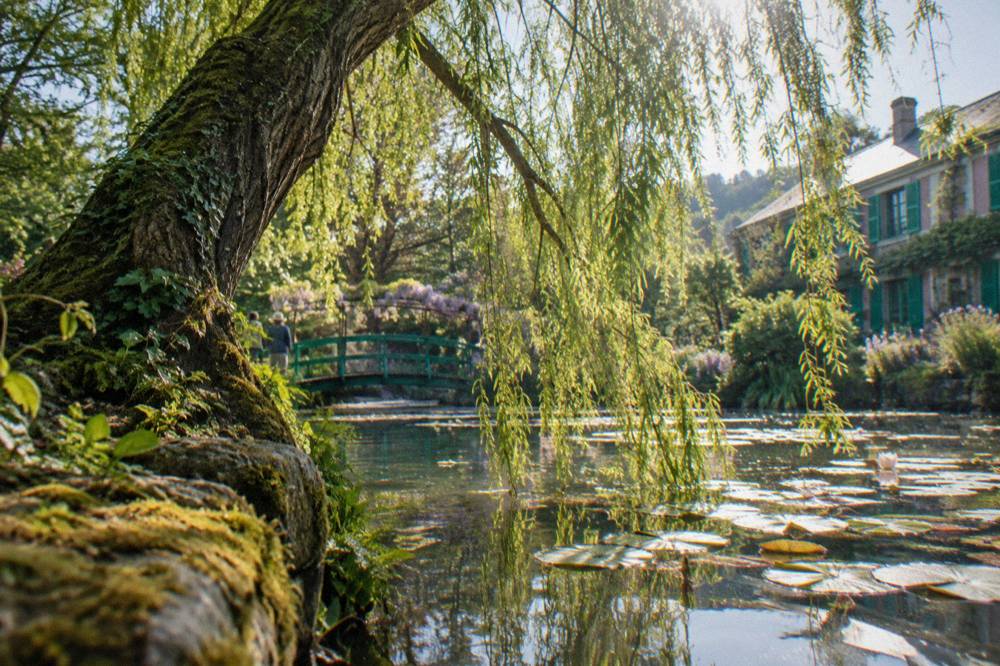
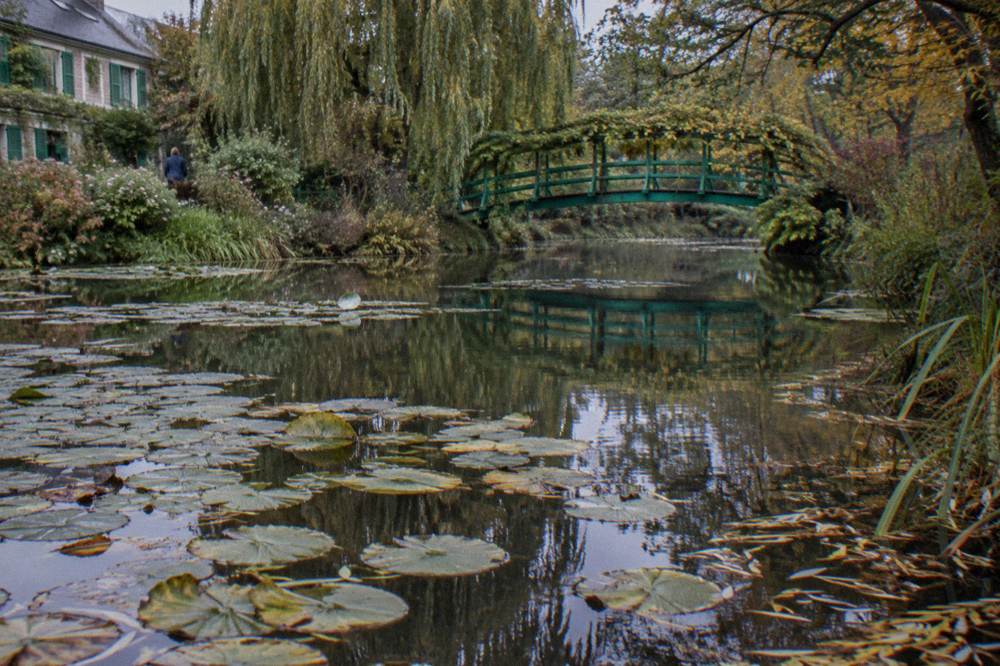
The design that came out of this reflects a painter's thinking rather than a gardener's. The pond was sized and banked so that the water surface reads as a mirror with almost no visible shore, closed in by willows, bamboo and wisteria so the sky and plants reflect without the outside world breaking in. The Japanese bridge, a green wooden arc copied in spirit from Japanese prints Monet collected, was placed to anchor compositions rather than to cross anything anyone needed to cross.
The garden's official page, maintained by the body that now runs the site, describes the water garden and the practical conditions for visiting it today, including the season dates and ticket details, at claudemonetgiverny.fr.
Thinking of seeing the pond on a guided half-day from Paris?
How Did The Pond Change Monet's Painting?
The pond gave Monet a subject with no horizon and no sky he was obliged to paint, just water, reflections and floating flowers, and it pushed his work toward the near-abstract late style of the Water Lilies cycle. From the decade after it was built onward he painted the basin repeatedly across changing light and seasons, a project that carried on for the rest of his life.
Before the water garden, Monet's Giverny paintings were landscapes and stacks and poplars, subjects with ground and sky. The pond removed both. When he set up his easel at the bank, or later floated a studio setup to work from the water, what he saw was a vertical sheet of reflections: clouds, willow leaves, the bridge arch and the lilies themselves, all sliding over each other as the light moved. Compositions built from that have no up or down in any conventional sense, and viewers of the late canvases often cannot tell water from reflection from flower without looking closely.
This is why the pond matters in art history beyond Giverny. The Water Lilies decorations, the great cycles installed in Paris, came out of decades of painting one small man-made basin, and their dissolving surfaces are among the most direct ancestors of abstraction in European painting. None of that required travel: the motif was a few steps from Monet's door, and he had designed it himself, which meant he could redesign it whenever a painting demanded a different bank, a different plant or a different reflection.
The garden itself kept changing to serve the paintings. Plants were added for their reflections rather than their blooms, the banks were raised to hide the fields beyond, and the bridges were repainted the specific green Monet preferred rather than the conventional red of Japanese originals. Gardening and painting were, at Giverny, a single activity, and the site visitors walk through today is the surviving half of that collaboration.
Monet painted this garden for about 43 years, from his arrival in 1883 until his death, and the pond occupied the largest share of that output once it existed. The full story of the site's fame is told in why Monet's garden is famous, and the reading pairs well with a visit.
When Do The Water Lilies Bloom Today?
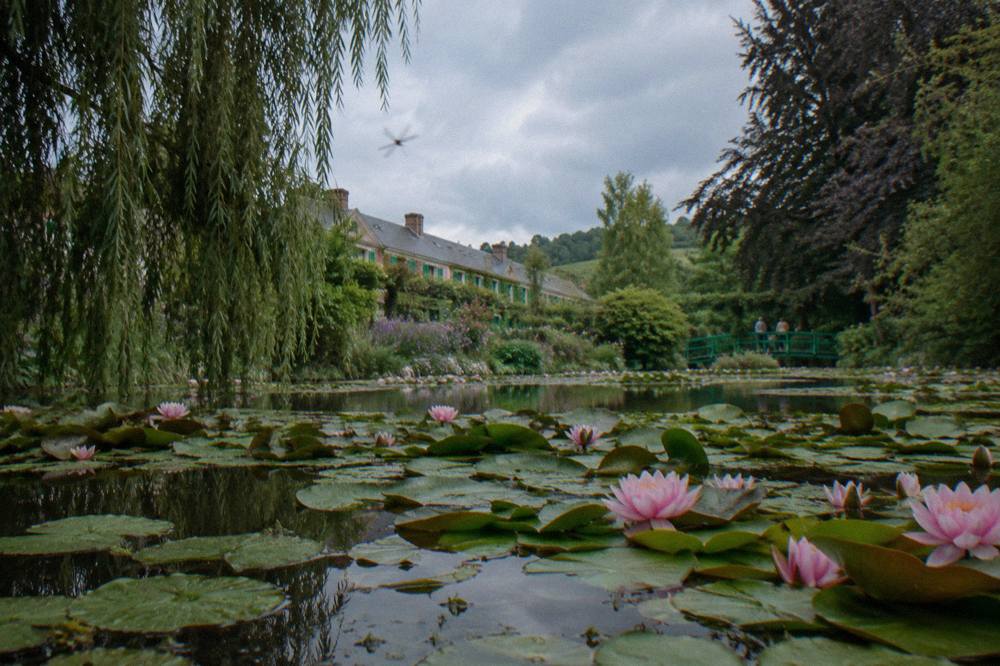
Water lilies at Giverny generally peak from late June through August, with pink, white and yellow blooms at their most spectacular in high summer and continuing into September and October in milder conditions. The pond changes character through the whole season, April through the start of November, so the blooms you see depend heavily on when you come.
The pond is not a one-month event. Spring belongs to the surrounding garden: tulips, daffodils and cherry blossom in April, then irises, peonies and the wisteria on the Japanese bridge in May. The lilies start in June, alongside the first roses on the arches of the Clos Normand, and reach full flower in July and August, when the nasturtiums, dahlias and sunflowers of the flower garden are also out. By September and October the display narrows to dahlias, asters and the last lily blooms among autumn foliage, and the season closes at the start of November. The rest of the planning pages sit alongside the tour comparison.
| Month | What the water garden shows | General crowd pattern |
|---|---|---|
| April | Pond filling in, tulips and spring bulbs in the flower garden | Moderate, building |
| May | Wisteria on the Japanese bridge, irises, peonies | Peak crowds |
| June | First water lilies, climbing roses, clematis | Very busy |
| July | Water lilies in full bloom, nasturtiums, dahlias | Very busy, hot |
| August | Water lilies still strong, dahlias, cosmos | Very busy, hot |
| September | Late lilies, dahlias, asters, nasturtiums on the Grande Allee | Easing |
| October | Final lily blooms, chrysanthemums, autumn foliage | Quietest month |
These are seasonal patterns, not promises for a given week: weather shifts bloom timing, and heat waves in recent summers have thinned some plantings while the lilies themselves kept going. The gardeners' own flowering calendar, the basis for most published bloom lists, is maintained at giverny.org.
If the lilies in full bloom are the whole reason for the trip, time the visit around July and August and go early or late in the day, when the light is best for photographs and the site is calmer. The half-day coach trip from Paris, from $66 per person with entry to Monet's house included, is the simplest way to move the whole plan out to Giverny and back inside about five hours, and its 4.2 rating across 3,032 reviews reflects a well-worn route rather than any single standout promise. Its departure point is a stated meeting address in the 7th arrondissement rather than hotel collection, so plan the metro ride to the meeting point the night before.
Can You See The Pond As Monet Designed It?
Largely yes: the water garden was restored and refilled decades after his death, following years of neglect, and the pond, the Japanese bridge, the wisteria, the willows and the enclosed banks follow Monet's own layout. The house and gardens now open every day from early April to the start of November, 10:00 to 18:00, with last admission at 17:30.
The survival of the pond is its own story. After Monet's death the property passed through inheritance and decline, the basin silted and the gardens thinned, and for a period the site was far from the immaculate mirror of the paintings. The restoration effort, driven by donors and the institutions that took the property over, returned the water garden to its documented shape: the pond dug back to its banks, the green bridge rebuilt, the plantings replanted from records of what Monet had grown. What a visitor photographs today is the recreation of his design, executed with unusual care and an attention to the painter's own letters and plant orders.
A few practical notes shape the visit. The recommended time on site is 1h30 to 2h, and the water garden alone, the second half of the circuit after the house and the Clos Normand, rewards patience: the pond reads differently from each bank, and the bridge view that closes most itineraries is worth reaching before the group waves arrive. Booking is recommended for weekends and public holidays rather than mandatory; tickets are also sold on site daily from 9:30, and once the online quota is gone the site warns of heavy crowds and a long wait at the gate. E-tickets are not refundable.
The rules on site reflect the fragility of a garden that huge numbers of people each year want to stand beside: exit is final, no picnics, no painting or drawing, no animals except assistance dogs, no large luggage and no cloakroom, and bag checks at entry. The gardens are accessible to reduced-mobility visitors while the house itself is not wheelchair accessible.
A local guide who works the site daily can point out the details of the restoration and the plantings as part of the walk. The two-hour guided tour of Monet's house and gardens, from $66 per person, rated 4.8 from 794 reviews, includes entrance tickets and a licensed local guide, and meets at a stated restaurant address on the main street of Giverny rather than providing transport.
How Do You Get To The Pond From Paris?
Giverny sits about 75 km from Paris, reachable by direct train from Paris Saint-Lazare to Vernon-Giverny in about 45 minutes to an hour, then a shuttle bus at 5 euros one way or 10 euros return, April to November. Dozens of trains run daily in each direction, but works on the line mean timetables should be checked before buying.
The independent route is simple on paper. The direct TER service on the Paris to Rouen line stops at Vernon-Giverny, with roughly 20 to 27 trains a day, and from the station the SN'go! shuttle covers the last stretch to the village, seats subject to availability. Check timetables before traveling because of works on the line. Cyclists can instead take the green way from Vernon, with bike hire available at the station, and drivers will find free car parks in Giverny, including the large Prairie lot near the site.
The guided alternative removes every one of those steps. A small-group half-day trip pairs round-trip transport from a central Paris meeting point with entrance to Monet's house and gardens, so the pond arrives as part of one ticket rather than three legs of planning. The listing rated 4.8 from 2,005 reviews, from $148 per person, runs in groups limited to 8 people with an expert guide and chauffeur, about 4 hours 30 minutes door to door, and lists free cancellation; hotel pickup is not confirmed on the listing, so check the listing for the meeting arrangement.
| Way to reach the pond | Cost | Time | What it includes |
|---|---|---|---|
| Train plus shuttle | Train about 6 to 24 euros, shuttle 5 euros one way, 10 euros return | About 45 minutes to an hour by train, then the shuttle | Independent travel, flexibility on return time |
| Half-day coach tour | From $66 per person | 5 hours | Round-trip coach, entry to Monet's house |
| Two-hour on-site guided tour | From $66 per person | 2 hours | Entrance tickets, licensed local guide, no transport |
| Small-group minivan half-day | From $148 per person | 4 hours 30 minutes | Transport, entrance, guide, group of 8 max |
The choice between them usually comes down to whether the day is about Giverny alone or Giverny plus something else. The Giverny and Versailles tour guide covers the full-day combination for travelers who want two chateaus in one ticket, and the train-versus-tour tradeoffs are laid out in detail in Giverny from Paris by train or tour.
Common Questions About Monet's Water Lily Pond
When was the water lily pond built?
The pond was built after 1893, when Monet acquired the plot across the railway line and secured the water rights. His flower garden around the house came first, beginning in 1883, and the water garden followed a decade later.
When do the water lilies bloom at Giverny?
Water lilies generally peak from late June through August, with the strongest display in July and August, and blooms continuing into September and October in milder conditions. Exact timing shifts with the weather each year.
Is the Japanese bridge the original?
The bridge follows Monet's own design and layout, and the water garden was restored to its documented shape after a long period of decline following his death. It is a faithful recreation rather than untouched original timber.
Can you see the pond without a tour?
Yes. Independent visitors reach Giverny by direct train from Paris Saint-Lazare to Vernon-Giverny in about 45 minutes to an hour, then the 5 euro shuttle. Entry to the house and gardens is 13 euros for adults at the gate or online.